From Dealer to Supervisor: What Changes Besides the Title
Dealer to supervisor transition means coordinating a casino floor with confidence: learn how to set priorities, direct former peers and make clear decisions.

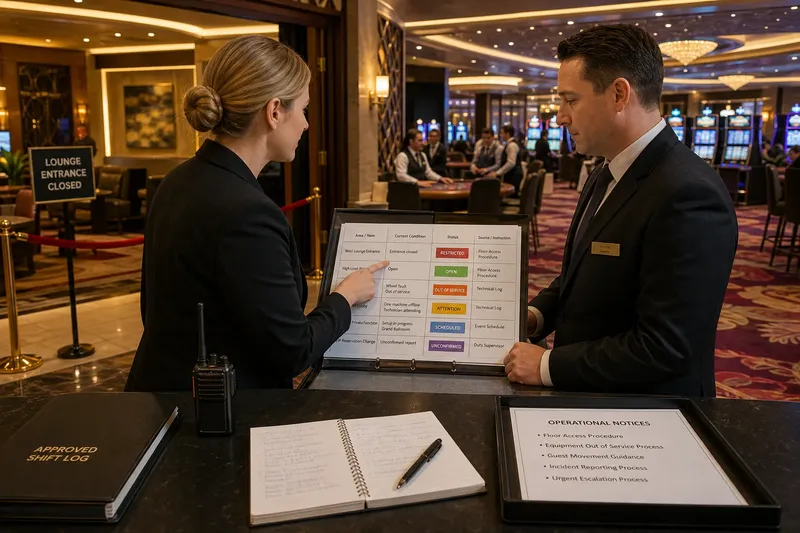
The most common mistake in a dealer to supervisor transition is treating the new job as table work with extra authority. That can leave colleagues unsure who is coordinating the floor, while a small delay spreads into a staffing problem. The role changes most when your attention shifts from one game to the connections between people, areas and decisions.
As a dealer, you have a defined place and a direct responsibility to the guests at your table. As a supervisor, you must keep that frontline perspective while deciding which situation needs attention, who should handle it and what can wait. You do not need to take over every task; you do need to make the next action clear.
A dealer to supervisor transition shifts attention across the floor
At a table, you concentrate on the game, follow procedure and respond to players. Supervising means moving between tables, staff and the wider operating rhythm without losing sight of those details.
A player’s question may need the dealer’s immediate response, while a queue elsewhere may call for a floor colleague. The useful question is not “How can I handle everything?” but “Who is best placed to act, and what information do they need?”
Say you are supervising an invented shift where one table is ready to open, a colleague is waiting for relief and another area has requested support. First, you confirm the table is ready and check which colleague is available; next, you assign that person to the most pressing task and tell the colleague awaiting relief what the plan is and when you will update them. The expected observable result is that each person has a clear next action, rather than two people duplicating work or nobody covering the outstanding request.
Before acting, identify whether the issue belongs at the table, involves staffing or needs coordination between areas.
Learn the venue’s rhythm before changing how it runs
In your first shifts, pay attention to where staff are positioned, how reliefs are arranged, who handles different escalations and which channels carry updates. Your venue’s training plan and manager should shape how quickly you take on responsibility; there is no need to redesign a routine before you understand why it exists.
Keep a discreet list of questions for your manager, such as how coverage is assigned or which channel is used when several teams need the same update. Do not put sensitive guest details in personal notes. Learn the approved process rather than creating an informal record that others may mistake for an official one.
Once you understand a routine, take charge of a defined task with the support your venue provides. You might coordinate a planned relief window, then ask your manager which instructions were clear and what you should check earlier next time.
Being useful does not mean joining every conversation. A calm direction to the right person often helps more than visible involvement in every issue.
Coordinate timing instead of managing only your own sequence
A dealer can often organise their own sequence around the table and venue procedures. A supervisor must see how reliefs, breaks, openings, changes in activity and unexpected absences affect more than one person.
At the start of a shift, check the staffing and operational information available through your venue’s usual channels. Confirm who is present, where coverage is needed and what planned changes may affect the floor. Keep the plan flexible, and check again when circumstances change.
Make updates actionable. “The relief is delayed” leaves people guessing; identify the affected area, the immediate arrangement and who will provide the next update. Send the message to the colleagues who need it, using the approved channel.
Before leaving, make sure outstanding operational matters have been passed through the venue’s established process. A brief check can clarify who owns an open task, but it does not replace any formal handover your role requires.
Give direction while respecting the limits of your role
Promotion can alter familiar relationships. A colleague who was your peer may now need a clear instruction, while another may question a decision based on their own experience. Be approachable, but do not make an operational direction sound optional when it is not.
Give a short reason when it helps someone act: “Please stay in this area while I arrange cover” is clearer than a bare command. If a discussion is sensitive, use the appropriate private setting rather than raising personal matters in front of guests or colleagues.
Know when to involve the designated manager or specialist. If a matter falls outside your authority, training or venue procedure, do not improvise. Local policy and the responsible manager should guide decisions with operational, regulatory or safety consequences.
Apply routine expectations consistently. If circumstances call for different treatment, explain the relevant operational reason without disclosing someone else’s private information.
How should a new supervisor handle common floor decisions?
How do I direct colleagues who used to be my peers?
Use respectful, specific language and the venue’s normal channels. If the change in relationship feels awkward, discuss expectations privately with your manager rather than avoiding necessary directions or becoming needlessly formal.
What should I do when two requests compete?
Check urgency, guest service and staff coverage, then use the venue’s escalation route if the priority remains unclear. Tell the affected colleagues what is being handled first and who will revisit the other request.
When should I ask a manager for help?
Ask when an issue exceeds your authority or training, procedure is unclear, or competing demands cannot be managed appropriately with the staff available. Raising the concern early gives the responsible manager room to coordinate a response.
Review decisions to build sounder judgement
After a shift, arrange a brief review with your manager or an agreed mentor. Discuss what information you had, how you assigned responsibility, whether colleagues understood the plan and what you would check sooner next time. Keep the focus on improving the process, not assigning blame.
As you take on broader routine coordination, ask for feedback on judgement and communication as well as task completion. If the same snag recurs, describe when it arises, which roles it affects and what information seems to be missing. Offer a possible adjustment, then let the responsible manager decide whether it fits policy and staffing needs.
Your experience as a dealer remains useful: it helps you spot when a plan is impractical and give directions that make sense at the table. In a dealer to supervisor transition, the central skill is making the next action and its owner clear. When a task crosses areas or falls outside your authority, that clarity includes knowing whom to involve and where the decision belongs.