The Handover That Saves the Next Shift a Guess
A casino shift handover helps the incoming team spot urgent floor changes, confirm what is known and use venue procedures without relying on memory.
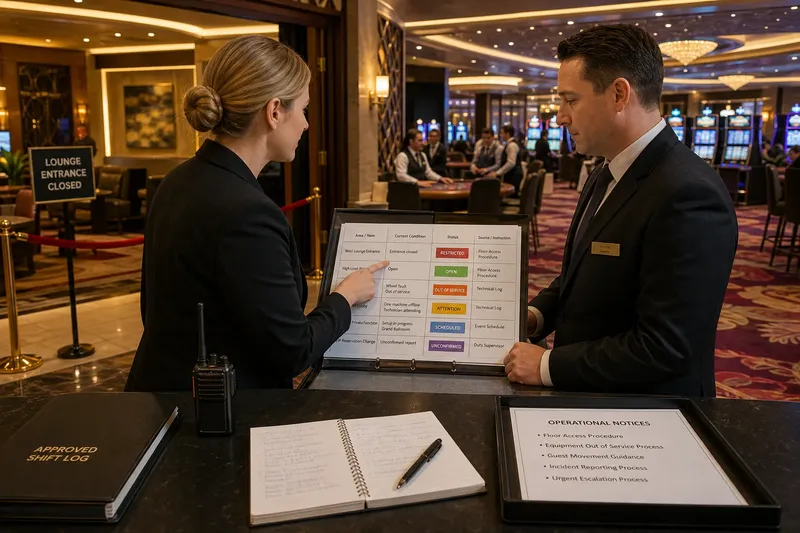
The commonest casino shift handover mistake is to recount the shift instead of identifying what has changed on the floor. The incoming team then has to work out which area is affected, what is known and which venue procedure applies. A useful handover makes those details easy to locate without turning a spoken briefing into a second incident report.
Keep the emphasis on operational conditions: open or restricted areas, equipment awaiting attention, scheduled activity and any instruction that affects how the floor should run. Use the approved log and channels for the record; a conversation can draw attention to an item, but should not replace the required process.
Start with the floor conditions the next team will inherit
At the agreed handover point, check the venue’s approved shift log and any relevant operational notices. Separate current conditions from events that are already resolved, and confirm changes against the source your venue designates rather than relying on a colleague’s recollection.
Describe a condition in terms the incoming team can recognise: the area or equipment involved, what is currently observable and any restriction or instruction already in force. Avoid guessing at a cause or predicting when something will be resolved. If the situation is unclear, say so and point to the appropriate supervisor or approved channel.
For example, “the west lounge entrance is closed under the current venue procedure” is more useful than “there was a problem by the lounge”. Keep guest details and incident information within authorised records and share them only with colleagues whose roles require them.
Separate operational changes from background detail
Put time-sensitive instructions and active restrictions where the incoming team will see them first, following the venue’s own priority labels. Keep routine context separate, so a note about a scheduled activity does not obscure an area that is currently unavailable.
Use one entry per distinct condition. If a machine fault and a change to a service area are unrelated, separate them rather than bundling both into a paragraph. That makes it easier for each relevant team to find the information that affects its work.
- Area access: If an entrance or floor area is marked closed in the approved record, then direct staff to the venue’s current access procedure; if the record conflicts with what is visible, pause and ask the supervisor to clarify.
- Equipment condition: If a machine or piece of equipment is marked out of service, then follow the venue’s isolation and notification process; if its status is missing or unclear, do not treat it as available and seek an authorised update.
- Temporary instruction: If a current instruction names a role or team, then pass it to that role through the approved channel; if no responsible role is identified, ask the duty supervisor rather than guessing who should act.
- Scheduled activity: If the approved schedule shows an activity affecting a guest-facing area, then check the relevant setup instruction; if the schedule and the floor differ, confirm the change with the appropriate supervisor.
- Unconfirmed update: If a report has not been verified by its designated source, then label it unconfirmed and keep it out of the confirmed-status summary; if it may affect immediate operations, raise it through the venue’s urgent process.
- Restricted information: If a note contains personal or incident details, then keep it in the authorised record and share only what the recipient needs; if the recipient’s access is uncertain, ask a supervisor before disclosing it.
Use a short spoken briefing to make changes visible
A spoken handover is useful for drawing attention to a change, not for retelling every event. Name the affected area or equipment, state what the approved record currently says and direct the incoming colleague to the source. Leave time for a question if the instruction could be misunderstood.
Say you are the outgoing supervisor and the approved log says the lounge entrance remains closed, while the current floor sign appears to have been moved. Tell the incoming supervisor about both observations, show them the entry and ask them to confirm the correct access instruction with the duty manager before directing guests. The immediate result is a clear decision point: follow the authorised instruction once clarified, rather than assuming the sign or the log is automatically current.
Do not pass an uncertain detail along as fact just to make the handover sound complete. “The update is not confirmed in the approved channel” is clearer than a confident-sounding guess.
How should a shift handover handle unclear or changing information?
What belongs in a casino shift handover?
Include current floor conditions, active restrictions, operational changes and the approved source for instructions the next team needs. Keep unrelated narrative and unnecessary guest information out of the briefing.
What should I do when two records conflict?
Do not choose whichever version seems more plausible. Pause any affected action where appropriate under venue procedure and ask the responsible supervisor to resolve the conflict using the designated source.
How do I pass on an unconfirmed update?
State plainly that it is unconfirmed, identify the approved source that still needs checking and avoid presenting it as a current instruction. If it could affect immediate operations, use the venue’s urgent escalation process.
Should every change be read aloud?
No: highlight changes that affect the incoming team’s immediate work, then direct colleagues to the approved record for supporting detail. Handle sensitive information only through authorised channels and with colleagues who need it for their role.
Leave the incoming team with a reliable reference
Before the teams separate, check that the handover points to the current approved records and that any spoken clarification has been entered through the venue’s normal process. If an instruction changes during the discussion, make sure the record is corrected by the authorised person rather than leaving two versions in circulation.
A good casino shift handover is not a longer account of what happened; it is a clear route to the current operating picture. When the incoming colleague can find the relevant instruction and tell which details are confirmed, they can begin the shift without turning uncertainty into an unofficial rule.